How GRS Certification Helps Boost Your Recycled Underwear Collection?
Introduction:
In a world increasingly shaped by eco-conscious consumers and climate accountability, “recycled” isn’t enough. If you're launching or expanding a recycled underwear line, your buyers don’t just want to hear you're using sustainable materials—they want proof.
That’s where GRS certification (Global Recycled Standard) comes in. More than a buzzword, GRS is a verifiable system that helps brands back up their claims about recycled content, responsible processing, and ethical production.
This article explores how GRS certification enhances the credibility, value, and market potential of your recycled underwear collection.
What Is GRS Certification?
GRS (Global Recycled Standard) is an international certification managed by Textile Exchange, aimed at verifying:
-
Recycled material content
-
Chain of custody and traceability
-
Environmental practices
-
Social responsibility in production
For underwear manufacturers, where intimate garments rely heavily on stretch fabrics, lace, and trims, GRS ensures every element of the garment—including labels, elastics, and stitching—follows strict guidelines for sustainability and ethical practices.
Why It Matters: Consumers Demand Certified Sustainability
? 1. Traceability in a Distrustful Market
In today’s greenwashing-prone environment, “eco” claims without third-party certification erode trust. GRS provides full supply chain transparency:
-
Where the recycled fiber came from
-
How it was processed and dyed
-
Which factory assembled the product
This is especially critical for B2B buyers, boutique brands, and online retailers needing verifiable chain-of-custody documents.
? 2. Value-Add for Premium Pricing
GRS certification is not only ethical—it’s marketable. Products labeled with GRS tags can:
-
Command higher prices
-
Be listed on eco marketplaces
-
Be sold in regions requiring green compliance, such as parts of Europe and North America
GRS vs Non-Certified Recycled Fabrics
| Criteria | GRS Certified Underwear | Non-Certified “Recycled” Garments |
|---|---|---|
| Recycled material verified | ✅ Yes | ❌ Not guaranteed |
| Supply chain traceability | ✅ From fiber to finish | ❌ Often unclear |
| Environmental impact checked | ✅ Water, energy, chemicals | ❌ Unknown |
| Worker welfare and social audit | ✅ Required | ❌ Not required |
| Market acceptance in EU/US | ✅ Widely accepted | ❌ Risk of rejection |
What Does GRS Cover in Underwear Production?
GRS certification isn’t just about recycled fabric. It covers multiple checkpoints:
-
Raw Materials: Recycled nylon, polyester, elastane
-
Dyes and Chemicals: Must meet environmental safety standards
-
Factory Audits: Includes BSCI, Sedex, or equivalent social compliance
-
Packaging: Recycled or responsibly sourced materials preferred
This means from fabric roll to shipping box, every step is held to global eco standards.
Real Buyer Use Case: Why Brands Choose GRS Suppliers
Let’s consider a U.S.-based DTC underwear brand looking to launch a sustainable line. They shortlist two manufacturers:
-
Manufacturer A: Offers “recycled” products but no certification
-
Manufacturer B: Provides GRS certified underwear with full documentation
Despite Manufacturer A offering a 10% lower cost, the brand chooses B because:
-
Retail partners require certification
-
Brand story depends on verified eco claims
-
Consumers are more likely to trust and convert with proof of sustainability
Consumer Trends in 2025: GRS Is No Longer Niche
Here are some rising search trends, showing that GRS and sustainability are entering the mainstream:
| Search Term | YoY Growth |
|---|---|
| “GRS certified underwear” | +175% |
| “sustainable lingerie brand” | +140% |
| “traceable recycled fabric” | +200% |
If your brand is not using GRS verified partners, you’re missing a huge slice of this rising demand.
How to Get Started with GRS Certified Manufacturing
✅ Step 1: Source from a GRS Certified Supplier
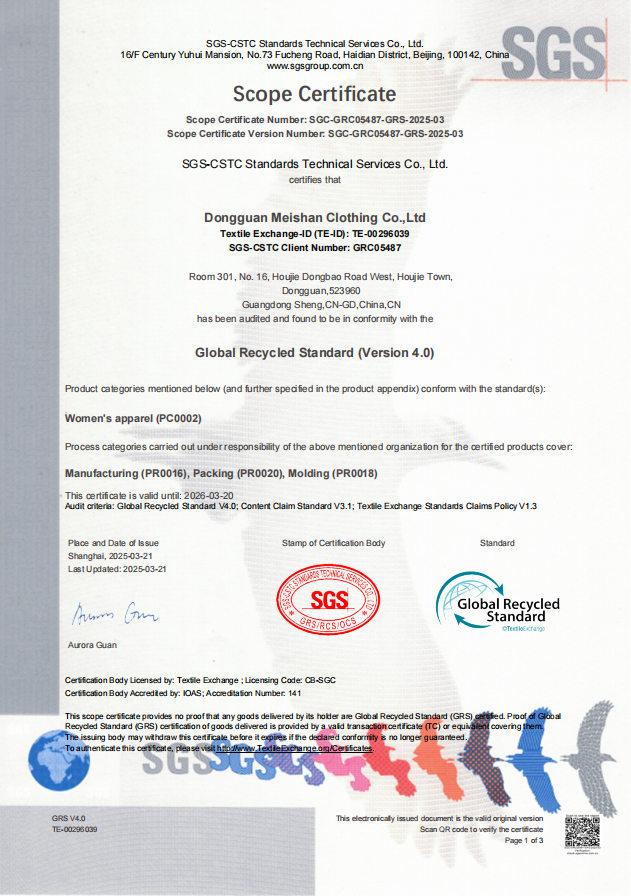
Ask your manufacturer for their Scope Certificate, which should list the specific product categories covered.
✅ Step 2: Verify on the GRS Public Database
Cross-check the supplier or fabric mill using the GRS public directory:
? //textileexchange.org/standards/grs/
✅ Step 3: Ensure Chain of Custody
If you’re assembling underwear from multiple certified components (lace, fabric, trims), all must be tracked under GRS rules.
✅ Step 4: Market the Certification
Use hangtags, packaging labels, and product pages to showcase your GRS compliance. Don’t hide your hard-earned credibility.
Conclusion: Certification Is the New Currency
In the recycled fashion space, GRS certification is no longer optional—it’s essential. As buyers grow savvier, and governments increase sustainability compliance checks, only the manufacturers who can show traceable, certified production will win the long game.
GRS is not just a label—it’s a system of trust, impact reduction, and market advantage. If you're building a recycled underwear collection, GRS doesn’t just help—it protects, elevates, and sells your brand.
Inside the Shapewear Manufacturing Process: A Guide for Global Buyers
Why OEKO-TEX Certified Shapewear Matters for Your Brand